





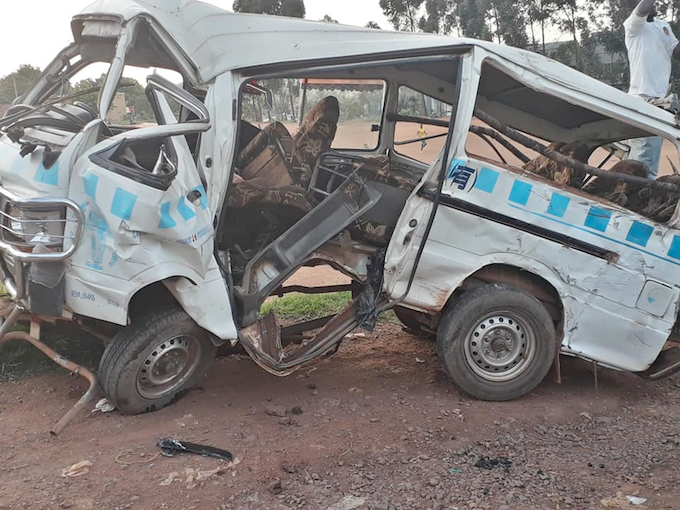
In Uganda, roads are no longer a means of mobility—they’ve become danger zones. Amid a sharp rise in traffic accidents, pedestrians are emerging as the biggest casualties of a broken transport system.
The country is now grappling with a nationwide road safety emergency that affects everyone—drivers, passengers, cyclists, and especially pedestrians. According to statistics from the Uganda Police Force, an average of 13 pedestrians are killed in traffic incidents each day.
In 2023, 1,675 pedestrian deaths were recorded, a grim toll that has only increased in 2024. Nowhere is the crisis more evident than in the capital, Kampala, where daily life plays out against a backdrop of congestion, disorganized transport, and poorly managed roads.
Whether walking to work, navigating a busy junction, or making your way past parked vehicles, there is little assurance of safety. Roads are choked by unregulated taxi stages, illegal parking, and a chaotic mix of vehicles, motorcycles, and people.
On Lumumba Avenue near the Insurance Regulatory Authority or the stretch of Jinja Road near Nakawa Market, simple pedestrian tasks like crossing the road can feel life-threatening. Evening traffic on just 700 meters of Jinja Road can take up to 20 minutes—thanks in part to vehicles parked where they shouldn’t be.
These traffic jams don’t just cause delays—they heighten stress, create confusion, and increase the risk of accidents.
“I spend nearly an hour just getting from the city center to Kireka,” says commuter Ronald Mugisha. “Half the delay is caused by taxis blocking roads or sudden checkpoints. People get impatient, and that’s how crashes happen.”
A Legal Framework Ignored
Uganda’s road safety crisis isn’t only a matter of poor infrastructure—it’s also a breakdown in law enforcement. The Road Act of 2019 lays out clear rules, such as penalties for abandoning vehicles and prohibiting parking on pedestrian walkways. Section 58(7) classifies any unattended vehicle left on a public road for over two hours as abandoned. Section 58(11) bans parking or driving on footpaths, violations punishable by fines or jail.
Click here to join our WhatsApp Group and Receive Daily News
But in practice, enforcement is rare. Cars and taxis regularly block roads for hours with no consequences. These vehicles not only worsen congestion but also force pedestrians into vehicle lanes—often with fatal results.
The 2023 Annual Crime Report from the police indicated that pedestrians made up 37% of all road deaths. By 2024, that figure had risen, with pedestrians, motorcyclists, and cyclists accounting for 84% of total road fatalities. Over 700 pedestrians were struck while crossing roads; over 500 were killed just by walking along them.
“These aren’t freak accidents,” says road safety activist Joseph Beyanga. “They are the outcome of ignored laws and bad planning. If boda bodas, cars, and people are competing for space, someone gets hurt—and usually, it’s the pedestrian.”
Beyanga also criticized the lack of pedestrian walkways and dedicated lanes for public buses. “People didn’t reject public buses. They failed because there were no designated lanes. One bus can replace 70 cars or motorcycles. But without proper infrastructure, it doesn’t work.”
Finger-Pointing and Weak Oversight
While traffic police are frequently seen at busy intersections, they deny responsibility for managing parking. SP Michael Kananura, from the Directorate of Road and Safety, said, “Parking regulation is KCCA’s responsibility. We step in when necessary.”
But critics argue that police presence means little if they allow illegal parking to happen under their noses. KCCA spokesperson Daniel NuweAbine admitted that taxi and boda stages remain ungazetted, though efforts to fix this are underway.
“We’re issuing fines and working with traffic police,” said NuweAbine. “Compared to six months ago, there’s been real progress.” Yet he acknowledged that illegal parking is still widespread and a challenge to regulate effectively.
Complicating matters are self-declared “stage chairpersons” who control unofficial taxi and boda stages. These individuals claim police and local officials recognize them and charge informal fees—ranging from Shs 10,000 to Shs 50,000—to drivers operating in their territory.
“If someone parks at our stage without permission, we fine them,” said one such leader in Nakawa. “Even the OC knows we’re here legally.”
These informal arrangements further undermine law enforcement and make systematic reform nearly impossible.
Real Lives, Real Losses
Each statistic reflects a shattered family, a child never returning home, or a parent killed while walking. Ruth Nalubega, who lost her brother to a road accident, shared:
“He was just walking. Someone had parked in the pedestrian lane, so he stepped into the road. That was it.”
Her brother is one of thousands. Until agencies like KCCA, traffic police, and urban planners stop shifting blame and start working together, Uganda’s roads will remain deadly.
What Must Be Done
To prevent more deaths, experts recommend
- Full enforcement of the Road Act 2019
- Investment in pedestrian walkways and public transport lanes
- Development of a national mass transit system
- Crackdown on illegal taxi and boda stages
- Unified coordination between KCCA and traffic enforcement
Until these measures are implemented, Uganda’s roads will continue to claim lives—not through misfortune, but through neglect.
Also Read: Amama Mbabazi’s Daughter Wanted Over Unpaid Shs 450m Loan