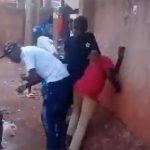


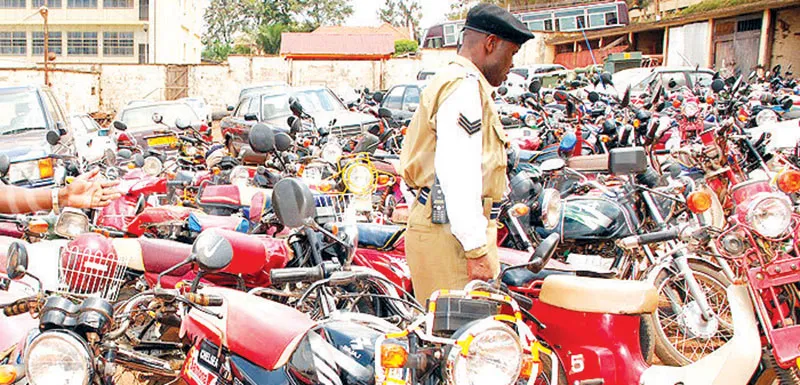
On any ordinary morning along Kampala Road, opposite the Boulevard building near Posta Uganda, the impact of corruption unfolds in real-time.
Beneath a mango tree, a boda boda rider kneels beside his motorcycle, tears tracing paths through the dust on his face.
“I don’t have even a coin, Afande,” he pleads. “I’ve worked all day—please let me go this once.”
The traffic officer walks off silently, only to return shortly with another rider. Without saying a word, he chains the first rider’s bike to a police post door. Meanwhile, the second rider discreetly hands the officer some money. Instantly, his bike is released.
This quiet transaction is all too common for boda boda riders in Kampala—an unspoken routine of extortion disguised as law enforcement. For many, the greatest danger on the road isn’t the traffic—it’s the authorities.
A Cycle of Fear and Survival
Boda bodas form the backbone of Uganda’s urban transport. In Kampala, they shuttle millions daily, offering quick and affordable rides through the city’s chaos. But it’s a largely unregulated and precarious livelihood.
Many riders operate without proper documentation—licences, helmets, registration—making them easy targets for corrupt officers.
“We ride knowing we can be stopped any time,” says Ssemwogerere, 34. “When that happens, you either pay or risk losing your bike.”
Formal traffic laws are often ignored. Instead of issuing tickets, officers confiscate keys—sometimes while riders are still moving—and hold bikes ransom.
“Once they take your keys, it’s over,” says Robert Kalyango, another rider. “Begging won’t help—only money does.”
Profit, Not Policing
Riders report that bribes typically range from Shs 30,000 to Shs 100,000, depending on location and the officer’s mood.
“This isn’t about safety,” says Dan, a rider who asked to remain anonymous. “It’s a business. Some officers make over Shs 200,000 daily.”
Extortion spikes during holidays, when traffic increases and officers become more aggressive. Some reportedly earn up to Shs 1 million a week from bribes—no tickets, no receipts, just cash transactions driven by fear.
“If you complain, they target you,” says Steven Nduga of Lungujja. “They remember your face and make your life hell.”
Despite clear procedures outlined in the Traffic and Road Safety Act, riders say the law is routinely bypassed for faster, more profitable methods.
“They know we live hand-to-mouth. It’s exploitation,” says a legal officer from a Kampala-based human rights organization.
No Recourse, No Justice
Without documentation, riders have no way to dispute these bribes or report abuse. “We get arrested for not wearing helmets,” Kalyango notes, “yet police officers ride around without them too. It’s hypocrisy.”
Click here to join our WhatsApp Group and Receive Daily News
For most, losing Shs 20,000 is devastating. “That’s school fees, food, medicine,” says Hussein, a father of three. He recalls borrowing money just to recover his bike after refusing to bribe an officer—an ordeal that left him jobless for two days and in debt for two weeks.
Some give up riding altogether, selling their bikes or seeking other work to escape the constant harassment.
A System That Encourages Corruption
Experts point to low pay and weak oversight as root causes. Officers, often poorly compensated, rely on bribes to survive.
“Traffic enforcement has become a black-market economy,” says an anti-corruption expert in Kampala. “When bribes outweigh salaries, the system collapses.”
The public is well aware. According to the 2020 National Integrity Survey, 70% of Ugandans view police as the most corrupt institution—traffic police topping the list. A 2022 Afrobarometer survey found 77% believe “most or all” officers are corrupt.
Even civilians witness abuses of power. Sharon Nakiwanuka, a street vendor, recalls overhearing a traffic officer demand the release of a detainee over the phone. “Just like that, she was let go,” Sharon says. “After that, I lost faith in the police.”
What Boda Riders Want
Boda riders aren’t asking for favours—just fairness.
“If I’m wrong, fine me properly,” says Kalyango. “But stop treating us like criminals.”
Their demands include:
- Clearly marked and regulated checkpoints
- Receipts for all issued fines
- An anonymous complaints hotline
- Fair licensing procedures
- Community-police dialogues to build trust
Some local councils are collaborating with boda associations to improve regulation and safety. But without broader reform, extortion remains entrenched.
Also Read: Amama Mbabazi’s Daughter Wanted Over Unpaid Shs 450m Loan