





Parliament has passed an amendment to Rule 72 of its Rules of Procedure, restricting how Members of Parliament (MPs) can reference the president during debates. The new rule prohibits MPs from imputing improper motives to the president or using the president’s name to influence discussions.
The amendment was part of a broader review of parliamentary rules by the Rules, Privileges, and Discipline Committee, chaired by Bugweri County MP Abdul Katuntu. The committee also proposed changes to Rules 70, 72, and 78. The new sub-rule under Rule 72 states:
“A Member of Parliament shall not impute an improper motive to the President or use the President’s name to influence debate. It is out of order to reference the President, Speaker, MPs, Chief Justice, or any Judge of the Courts of Judicature in an amendment, question to an MP, or remarks in a motion dealing with any other subject.”
Purpose and Justification
Katuntu defended the changes, emphasizing that the rule aims to promote orderly debates and prevent the misuse of the president’s name.
“References to the speaker, MPs, and justices of the Courts of Judicature are already restricted under our rules. We’ve now added the president for consistency,” he explained.
Click here to join our WhatsApp Group and Receive Daily News
However, Leader of the Opposition (LoP) Joel Ssenyonyi expressed concern that the amendment could stifle parliamentary scrutiny and limit MPs from seeking clarification on presidential directives.
“If I ask for clarity about a directive, it could be seen as influencing debate. The speaker already has the authority to call a member to order if their remarks are improper. We shouldn’t unnecessarily restrict discussions,” Ssenyonyi argued.
He further noted that since the president is represented in parliament by officials like the vice president and prime minister, MPs should be able to reference presidential statements for clarity.
“If this amendment passes, we won’t even be able to question the president’s statements. Proper conduct can be enforced without curtailing debate,” he added.
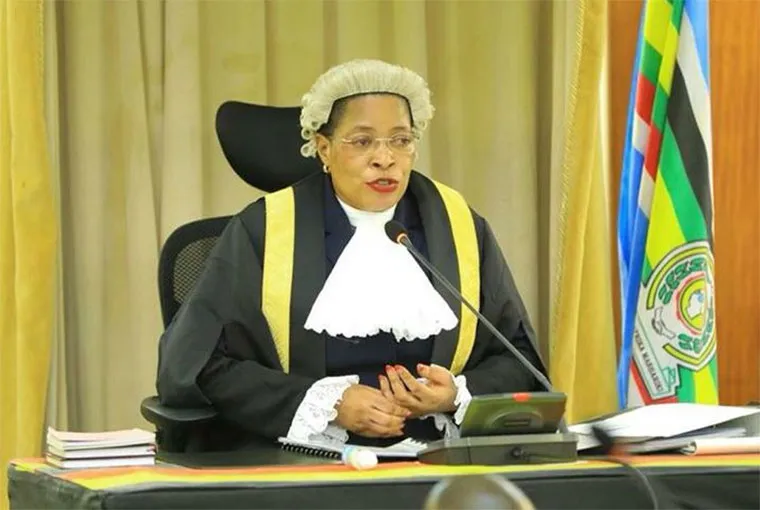
Speaker Anita Among clarified that discussions about the president would only be allowed if a formal motion is tabled.
“The president cannot be debated unless there’s a motion before the House. This rule ensures parliamentary focus and order,” she stated.
Other Key Amendments
Parliament also approved changes to Rule 78(c)(2), which previously allowed ministers to reject MPs’ requests for clarification without limitation. The revised rule now restricts ministers to rejecting such requests only three times before they must allow an MP to speak.
Deputy Attorney General Jackson Rwakafuuzi warned that the rule could be misused by MPs to disrupt debates through coordinated interruptions.
“This could be abused to frustrate ministers during debates,” he cautioned.
However, MP Aisha Kabanda defended the amendment, arguing that it promotes accountability.
“MPs deserve answers. This rule ensures ministers engage in meaningful dialogue rather than hiding behind prepared statements,” she said.
Additionally, changes to Rule 70 introduced a five-minute speaking limit for MPs on any matter before the House. The presiding speaker now has the authority to set time limits and direct members to conclude their remarks once the limit is reached.
Katuntu explained that the amendment aims to streamline debates and ensure equitable participation.
Also Read: Authorities Launch Investigations as Anthrax Kills Two in Kazo