




On Monday, the High Court in Kampala resumed the murder trial of Molly Katanga and four others, with a government forensic analyst’s testimony taking center stage as a critical element in the prosecution’s case.
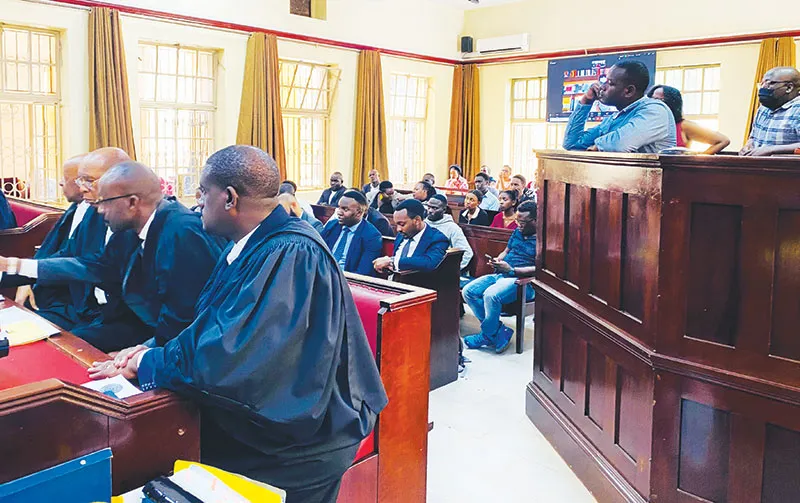
Courtroom 3 maintained a solemn tone as legal teams, journalists, and a few thoroughly screened spectators listened closely to the proceedings. Outside, the High Court grounds bustled under the sun, with heavy security emphasizing the high-profile nature of the case. Molly Katanga, widow of the late Henry Katanga, observed the session via three TV monitors inside the courtroom.
Standing together in the dock were her daughters, Patricia Nkwanzi and Martha Kakwanzi, and two house employees, George Amanyire and Charles Otai—all charged in connection with Henry Katanga’s fatal shooting in November 2023, a case that has drawn national attention.
The prosecution team includes Somali Workhooli, Assistant Director of Public Prosecutions, along with Jonathan Muwaganya and Ann Kizza. Representing the accused are seasoned lawyers Elison Karuhanga, Macdusman Kabega, Peter Kabatsi, and John Jet Tumwebaze, with Justice Rosette Comfort Kania presiding.
Prosecution’s Case and Forensic Evidence
The state alleges that on November 2, 2023, Molly Katanga deliberately shot her husband during a domestic dispute, asserting it was a planned act. The defense, however, argues that his death was the result of a spontaneous, unfortunate altercation. The trial has experienced multiple delays, partly due to administrative changes and contested applications.
This week’s proceedings featured testimony from Resty Alexandra Naziwa, a forensic toxicologist and the 13th prosecution witness. She described how postmortem samples were submitted by police and analyzed using gas chromatography-mass spectrometry to detect toxins or drugs.
Her findings revealed that none of the samples contained poison, alcohol, or illicit substances. Naziwa concluded that Henry Katanga’s death was not caused by poisoning or drugging, reinforcing the prosecution’s argument that the fatal gunshot wounds were inflicted by another person.
Cross-Examination Highlights
Under cross-examination, defense attorney Macdusman Kabega pressed Naziwa on whether her analysis was influenced by police statements included in the submitted documents. Naziwa admitted that the police form indicated the deceased had died from gunshot wounds following a domestic incident, with an implied suggestion of suicide.
Kabega emphasized this point, using court documents to challenge the neutrality of the forensic analysis, suggesting it may have been shaped by pre-existing police narratives.
Atmosphere and Trial Dynamics
Throughout the session, Molly Katanga and her co-accused maintained calm demeanors as the courtroom remained tightly controlled under heavy security. Public interest remains high, with the trial continuing to attract significant media coverage.
Legal Implications and What Lies Ahead
The absence of toxins in the deceased’s system lends weight to the state’s claim of intentional murder. However, the defense is expected to argue that the lack of evidence indicating a struggle or coercion suggests an accidental or self-inflicted incident.
Upcoming testimony from forensic experts and law enforcement will be critical in determining whether Molly Katanga can be directly linked to the shooting. Legal analysts note that without eyewitnesses, the case hinges on circumstantial and forensic evidence.
Now in its second year, the case has sparked nationwide debate over issues of justice, domestic violence, and privilege. While some see Molly as a victim of a tragic family dispute, others demand accountability, regardless of social status.
The trial will resume on May 6, with the court inching closer to uncovering the full story behind the events of November 2, 2023.