




The Ugandan government is under increasing pressure to justify a contentious revenue-sharing agreement under the Express Penalty Scheme (EPS), which directs 80% of road fine revenue to a Russian private company—leaving the state with just 15%.
Touted by the Ministry of Works and Transport as a means to reduce traffic fatalities and improve road infrastructure, the EPS has sparked public outcry after revelations that GS, the contracted Russian firm, is set to collect over $408 million out of the estimated $510 million in fines.
In stark contrast, Uganda will receive only $76.5 million, while the remaining 5%—approximately $25.5 million—will go to the National Enterprise Corporation (NEC), a government-owned body.
This skewed distribution came to light through a minority report submitted by a group of MPs in 2024, urging Parliament to reject the deal entirely.
Click here to join our WhatsApp Group and Receive Daily News
Lawmakers and citizens have slammed the arrangement as unjust and exploitative, particularly since the government supplies land, enforcement personnel, and infrastructure at minimal cost. Committees reviewing the EPS model have labeled it “commercially irrational,” arguing it protects the private firm from financial risk while exposing the government to public backlash.
The controversy deepened when it emerged that Uganda will not benefit from an additional $486 million generated through related services—such as license plate issuance and vehicle tracking—all of which are fully controlled by the private contractor.
“This is more than a bad deal—it’s a national scandal,” an MP stated during a heated session. “We were told EPS would finance road repairs. But if only 15% returns to government, who is really being served?”
Initially praised as a technological solution to road safety, the EPS uses traffic cameras to detect violations and issue on-the-spot fines. However, the financial details now call into question whether the program was truly designed with public benefit in mind.
Comparisons to Rwanda’s system highlight Uganda’s shortcomings. Rwanda introduced automated traffic fines six years ago, charging around Shs80,000 per violation, and has since reduced road deaths by 22%. Their revenues are invested into social services like community health insurance, with no private firm siphoning profits or police officers earning bonuses.
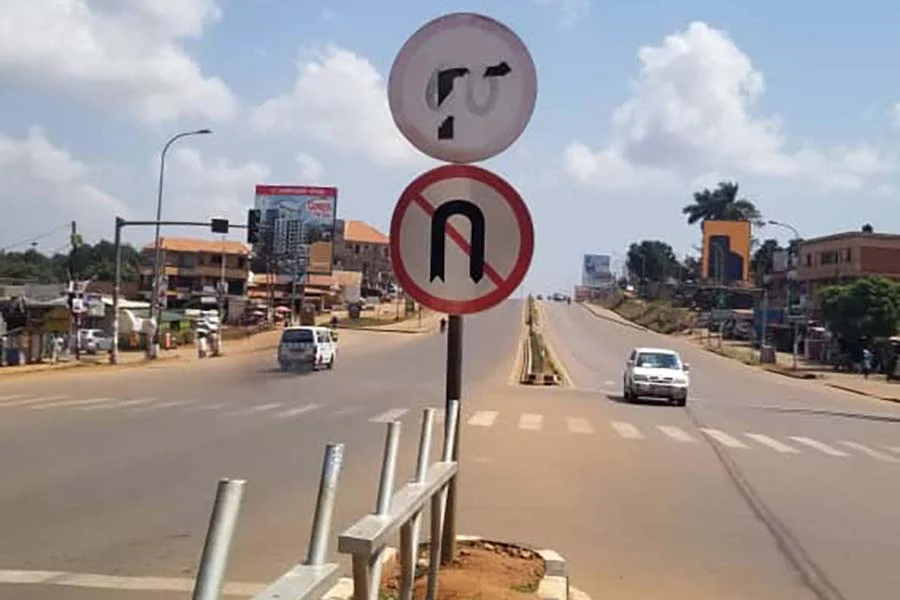
In Uganda, drivers face fines as high as Shs600,000—almost triple Rwanda’s rate—despite contending with poor road conditions, inadequate signage, and erratic enforcement. Critics argue that such penalties are unfair, especially when structural problems on the roads remain unaddressed.
“What good is automation if drivers are fined for swerving potholes or reacting to confusing signals?” questioned policy analyst Raymond Kasirye. “Without just enforcement and reinvestment, this becomes a blatant cash grab.”
With national elections looming in 2026, political analysts warn the EPS scandal could damage the government’s credibility if road improvements remain unseen.
Parliament’s committee has called for an immediate overhaul of the EPS agreement, urging a fairer revenue-sharing model that considers the risks each party assumes. They also recommend government inclusion in the profits from auxiliary services now monopolized by the contractor.
“The people of Uganda deserve better,” the committee concluded. “If safety is the goal, then public money must serve public interests—not enrich foreign entities.”
For now, however, motorists remain stuck with exorbitant fines, while the majority of the money continues to leave the country.
Also Read: Amama Mbabazi’s Daughter Wanted Over Unpaid Shs 450m Loan