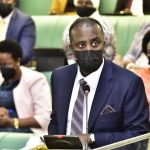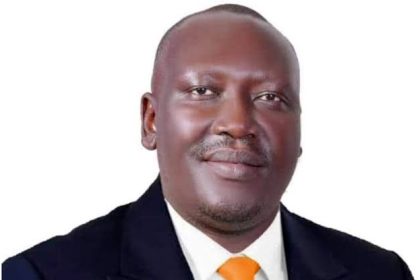



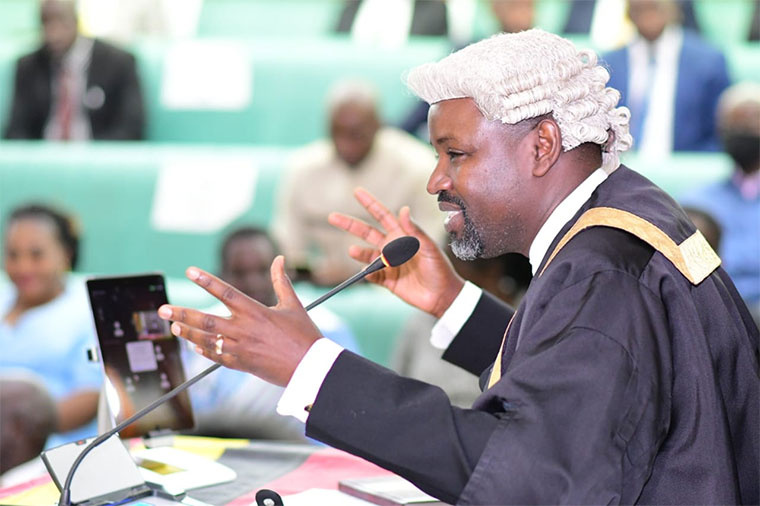
Speaking to youths at the Ndere Cultural Centre last week, Deputy Speaker of Parliament Thomas Tayebwa emphasized that the fight against corruption should address not only the illicit theft of money but also the legitimate misuse of funds, such as penalties and interest payments resulting from delays in paying contractors.
Tayebwa made these remarks during a “fireplace conversation” with young people from various political parties, an initiative established by Bernard Odoi Onen, the Youth MP for the Eastern region, to facilitate open dialogue between youth and their leaders.
His comments come amid increasing public scrutiny of parliament over allegations of widespread corruption and misappropriation of public funds. Currently, five MPs are facing corruption charges: Cissy Namujju, the Lwengo district woman MP; Paul Akamba, the Busiki MP; Yusuf Mutembuli, the Bunyole East MP; Mawanda Michael Maranga, the Igara East MP; and Wamakuyu Ignatius Mudimi, the Elgon legislator.
“You might have problems with parliament, but never kill parliament because one day you will need it,” Tayebwa advised the youth.
According to the budget for the financial year 2024/2025, the government has allocated Shs 9 trillion for interest payments to the country’s creditors, including the World Bank, the Exim Bank of China, and commercial banks. This allocation highlights a significant increase in interest payments over recent years.
In the previous two financial years, interest payments surged by 1.42 trillion shillings ($375.8 million), rising from 4.69 trillion shillings ($1.23 billion) in FY 2022/23 to 6.112 trillion shillings ($1.6 billion) in 2023/24.
Corruption in Uganda, characterized by bribes, nepotism, embezzlement, and other illicit financial flows, has severely impacted public service delivery and resulted in substantial financial losses. The Inspectorate of Government estimates that Uganda loses approximately Shs 10 trillion annually due to corruption-related activities.
This widespread corruption has undermined trust in the government, led to deteriorating infrastructure, caused delays in project implementation, discouraged investments, compromised social services, and, in severe cases, resulted in loss of life.
The Corruption Perceptions Index (CPI) 2023 reflects the severity of the issue, ranking Uganda 141st out of 180 countries with a score of only 26. The CPI measures perceived levels of public sector corruption globally, where zero indicates a highly corrupt state and 100 represents a very clean one.
“Personally, I don’t want to look at corruption merely from an aspect of money that is being stolen, money lost illegitimately. There is also money the government loses legitimately, and it is higher than the one which is stolen, but because it is formally and legitimately lost, you don’t complain about it,” Tayebwa remarked.
He noted that the government incurs a daily loss of Shs 285 million in interest and penalties paid to contractors of the Uganda National Roads Authority (Unra) due to delays in payments.
Last year alone, Shs 26 billion was paid to Unra as penalties for late payments to contractors. This constitutes a legitimate financial loss that remains unaccounted for, with no individuals held responsible. This issue is not confined by Unra, similar problems extend to other entities under the Ministry of Water and Environment.
Additionally, loans from as far back as 2010, which are performing at only 30%, continue to accrue interest. This interest, a statutory obligation, must be paid before any funds can be allocated for essential services such as medicines. The burden of these payments is growing, further straining the government’s budget.
He emphasized that the error of overlooking such issues is over. Those in positions of authority must no longer passively watch as the government incurs losses that affect taxpayers. Instances where employees demand kickbacks for decision-making have led to substantial financial losses for the government.
Individuals caught engaging in such practices will be held accountable, facing not only compensation for the losses incurred but also potential loss of their positions.