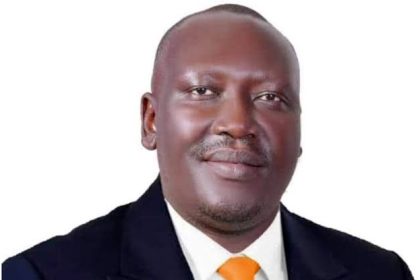

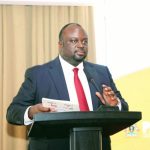


Uganda’s Chief Justice, Alfonse Owiny-Dollo, has dismissed suggestions that he needed bravery to lead a landmark Supreme Court ruling that barred the trial of civilians in military courts.
Speaking at the 8th Benedicto Kiwanuka Memorial Lecture in Kampala, Justice Owiny-Dollo said his decision was guided purely by the law and the oath of office he swore, rather than personal courage.
Click here to join our WhatsApp Group and Receive Daily News
“I never required even an iota of courage to interpret the Constitution against the UPDF Act. No courage at all,” he told the audience.
In January, the Supreme Court declared that military tribunals had no jurisdiction over civilians, ruling in favour of a petition filed by former legislator Michael Kabaziguruka. The judgment was hailed by lawyers, human rights activists and many Ugandans as a rare act of judicial independence in a country where the army wields significant power.
However, the celebrations were short-lived. Parliament has since passed, and President Museveni signed into law, the Uganda People’s Defence Forces (Amendment) Act 2025, which reinstates the military’s authority to try civilians in specific cases.
Rights groups argue the amendment defies both the Constitution and the Supreme Court’s decision. The opposition National Unity Platform has already petitioned the Constitutional Court to challenge the law.
The issue of judicial courage emerged during the memorial lecture for Benedicto Kiwanuka, Uganda’s first chief justice, who was abducted and killed by soldiers under Idi Amin in 1972. Delivering the keynote address, former Uganda Law Society president Francis Gimara urged judges to embrace “civic courage” in defending justice as a way of honouring Kiwanuka’s legacy.
Justice Owiny-Dollo, however, pushed back on this notion, insisting that Kiwanuka’s legacy was rooted in loyalty to his judicial oath, not defiance.
“If it requires a judge to be courageous to render justice, that is very dangerous,” he said. “Chief Justice Benedicto Kiwanuka was a conscientious person, a man who stood by his oath.”
The chief justice added that courage would only have been required had the court chosen to make a ruling against the law.
Despite the Supreme Court’s order that all civilian cases in military courts be transferred to civilian courts, many suspects remain in detention. Critics say the new UPDF Act undermines the rule of law and risks entrenching military dominance over Uganda’s justice system.
They also point to the irony of honouring Kiwanuka—who was murdered by soldiers—while passing laws that continue to place civilians under military jurisdiction.
The debate highlights a broader struggle over the independence of Uganda’s judiciary. Justice Owiny-Dollo maintains that his court’s ruling was a straightforward reading of the Constitution. Yet with parliament and the presidency taking the opposite stance, the clash has raised pressing questions over who truly safeguards Ugandans’ rights when the country’s institutions collide.
For now, Justice Owiny-Dollo insists he is not a man of courage, only of conscience. But as political and legal battles intensify, the true test may lie in how much resolve Uganda’s judiciary can muster in the years ahead.
Also Read: Amama Mbabazi’s Daughter Wanted Over Unpaid Shs 450m Loan