





The recently implemented Automated Electronic Penalty System (EPS) has triggered widespread frustration among motorists across Uganda. Many view the system not as a road safety tool, but as a punitive and exploitative measure.
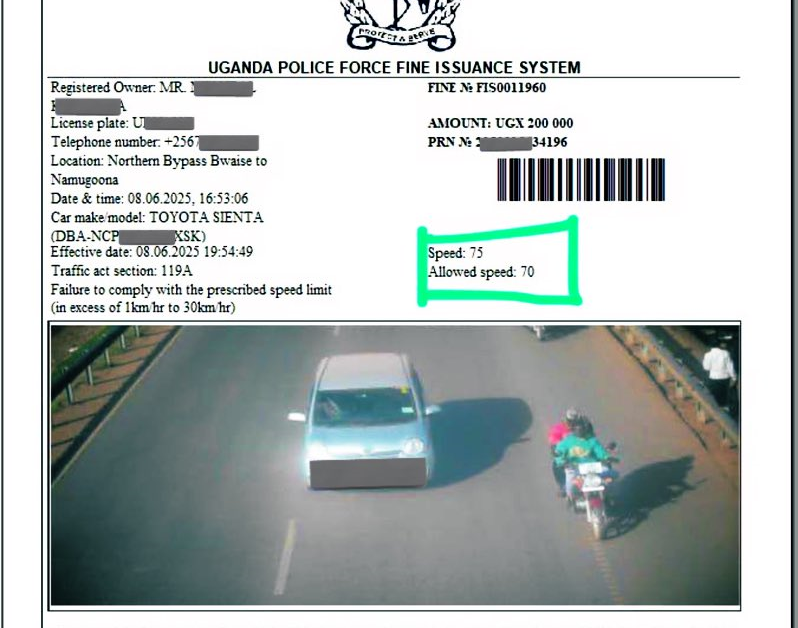
EPS, which uses automated number plate recognition (ANPR) cameras to catch violations such as speeding and running red lights, issues instant digital tickets to vehicle owners via SMS or email. Offenders have 72 hours to pay or face a 50% surcharge. Unsettled fines can prevent drivers from renewing licenses or traveling abroad.
However, drivers argue that the system is doing more harm than good. Gilbert Asasira, a frequent road user, recounted receiving three separate tickets in one day totaling UGX 1.4 million—a figure that ballooned to UGX 2.1 million after just three days.
Click here to join our WhatsApp Group and Receive Daily News
“I drove from Mpala to Mukono via the Northern Bypass and back to Entebbe. Each stretch earned me a ticket,” Asasira posted online.
Motorists now feel compelled to crawl along roads designed for high-speed traffic like the Northern Bypass, where speed limits have reportedly been reduced to 30km/h. Critics say this puts drivers at greater risk, especially in areas prone to crime. Former comedian Daniel Irish Kanyerezi, who was also fined, questioned the rationale behind such limits on unsafe roads.
“This isn’t just about traffic; it’s about safety. These slow speeds are dangerous at night,” he said.
Concerns also surround the system’s accuracy. One social media user, Denis Woniala, said his friend received a ticket showing a Nissan X-Trail bearing his Toyota Spacio’s license plate.
“Is this a case of duplicate plates? We just want answers from the authorities,” he wrote.
Even more troubling are incidents where EPS fines are issued despite drivers following instructions from live traffic officers. One user shared being ticketed after obeying a traffic officer who waved vehicles through a red light, revealing a major flaw in how the EPS integrates with on-the-ground traffic management.
Traffic in Kampala is frequently directed by officers from the Uganda Police and KCCA, who often override traffic lights to ease congestion or respond to emergencies. Yet EPS cameras, still linked to traffic signals, continue issuing fines, leaving compliant drivers penalized.
In light of the backlash, the Ministry of Works and Transport has pledged to improve transparency. Ministry spokesperson Allan Ssempebwa stated that future tickets will detail the actual speed recorded and the applicable speed limit.
“These changes aim to make the ticketing process clearer to motorists,” he said.
Still, many argue the reforms don’t address the core issues. Duncan Abigaba, a former presidential assistant, said EPS is targeting the wrong problems in Kampala.
“The real issues are potholes, chaotic boda bodas, and unauthorized sirens—not overspeeding,” he posted, encouraging legal and civic action under the hashtag #RejectEPSAutoUg.
Drivers also point to the hidden costs of the system. Slower speeds mean longer travel times and higher fuel consumption—painful in a country already burdened by high fuel prices.
While authorities defend the system as a necessary road safety initiative, critics insist that it is overly harsh, poorly integrated, and blind to the complex dynamics of urban traffic.
As public outcry grows, so too does the demand for a system that prioritizes fairness, safety, and practicality—without punishing law-abiding drivers for simply obeying commands.
Also Read: Amama Mbabazi’s Daughter Wanted Over Unpaid Shs 450m Loan