

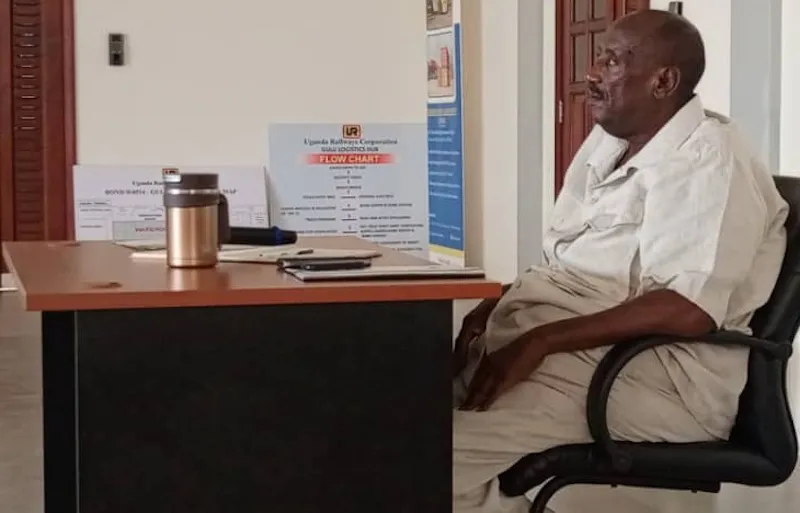
General Caleb Akandwanaho, widely known as Salim Saleh and a brother to President Yoweri Museveni, has dismissed claims that he owns a significant portion of Kampala, urging instead for a serious national conversation around Uganda’s complex land issues.
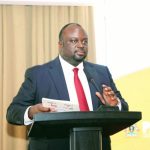
Saleh, who chairs the Uganda Development Forum (UDF), stated that land is a vital but poorly understood and mismanaged asset that greatly influences Uganda’s economic development. Speaking during the Fourth Uganda Development Forum in Kampala, he emphasized that land had proven to be the most problematic factor of production during his work under Operation Wealth Creation (OWC).
“Under OWC, we found land to be the most distorted production factor,” he said in a virtual presentation from Gulu, where he has stayed for years to escape what he termed the “confusion in Kampala.”
Click here to join our WhatsApp Group and Receive Daily News
He cited expert insights, including those of Amanda Ngabirano, head of the Physical Planning Board, to underscore the need for a comprehensive understanding of land use in Uganda. Saleh posed a critical question: “Do we know how to utilize land effectively to feed our projected population of 40 million by 2040?”
He warned that poor land distribution and unclear ownership not only hinder agricultural productivity but also negatively impact other sectors. To address this, he revealed plans to raise funds for a study into land ownership patterns in Kampala.
“People joke that I own half of Kampala,” he said. “At most, I own two acres.” He also recalled prior investigations by the Internal Security Organisation (ISO), saying he was able to respond confidently due to earlier research conducted on Namunkekera land in Kapeeka—where he runs the Namunkekera–Liao Shen Industrial Park.
Saleh encouraged the forum to examine land not just as a resource, but as a critical economic driver, noting that many reforms in Uganda’s past—such as privatization, liberalization, and the return of properties to Asians—relied on land ownership frameworks.
He also highlighted increasing land conflicts, especially in northern Uganda, where disputes between the Acholi community and migrant cattle herders, known as balaalo, are intensifying.
Reflecting on Operation Wealth Creation, Saleh admitted that efforts to lift impoverished Ugandans out of poverty have faced serious hurdles. The initiative aimed to reach people with little to no access to money by distributing agricultural inputs. He claimed that these efforts have lowered the percentage of Ugandans outside the money economy from 68% to around 39%.
On political matters, Saleh commented on recent internal discussions within the Democratic Party (DP), following reports that DP president Norbert Mao invited him to speak at an upcoming delegates’ conference. Some DP members reportedly questioned this decision.
In response, Saleh pointed out that the DP played a major role in President Museveni’s first cabinet in 1986, noting that 60% of the ministers were from DP. He reminisced about the fallout between NRM and DP in the mid-1990s, attributing part of the split to Mao’s intense activism at the time.
He expressed disappointment over the loss of unity but praised Mao’s current involvement in the Uganda Development Forum, where he serves as vice-chairperson. Saleh wished Mao success in the upcoming DP conference. The NRM and DP formalized their partnership in 2022, although critics argue that the deal mainly favors Mao and his allies.
The Uganda Development Forum, founded by Saleh, includes prominent figures such as former intelligence head David Pulkol and Dr. Philip Idro.
Also Read: Amama Mbabazi’s Daughter Wanted Over Unpaid Shs 450m Loan