






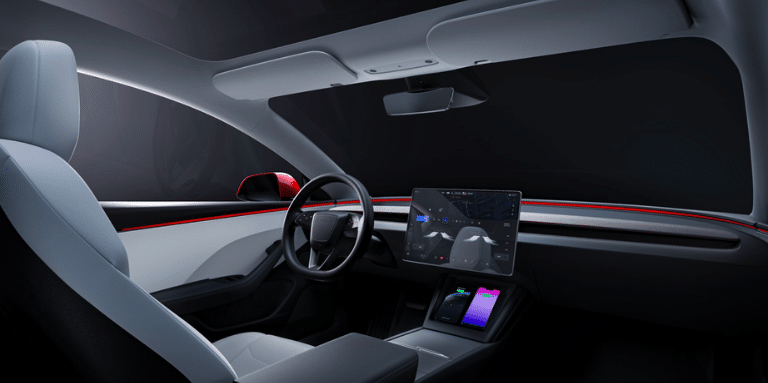
The Tesla Model 3 Highland is an electric sedan that was presented at the 2023 Frankfurt Motor Show. It features a 286 hp electric motor and a 75 kWh battery, giving it a WLTP range of 554 kilometers.
However, what makes the Tesla Model 3 Highland particularly interesting is its exceptional energy consumption. With an average consumption of 13.9 kWh/100 km, it’s one of the most efficient electric vehicles on the market.
This reduced consumption is due to several factors, including :
The use of lighter materials, such as aluminum, for the body and structure of the car:
The use of lighter materials, such as aluminum, reduces the weight of the car. This has a positive impact on energy consumption, as the car needs energy to move.
In the case of the Tesla Model 3 Highland, the use of aluminum has resulted in a 10% weight reduction compared to previous versions. This translates into lower energy consumption of around 2 kWh/100 km.
Improving the car’s aerodynamics:
Improved aerodynamics reduce wind resistance. This also has a positive impact on energy consumption, as the car needs less less energy to move.
In the case of the Tesla Model 3 Highland, the drag coefficient has been reduced from 0.23 to 0.219. This translates into a reduction in energy consumption of around 1 kWh/100 km.
Optimization of battery management software.
Optimized battery management software enables better management of battery charging and discharging. This reduces energy losses.
In the case of the Tesla Model 3 Highland, the battery management software has been optimized to improve energy efficiency by 10%. This translates into reduced energy consumption of around 1.3 kWh/100 km.
The Tesla Model 3 Highland’s exceptional energy consumption means significant savings on recharging costs. It’s also more environmentally friendly, emitting fewer pollutants than gasoline- or diesel-powered cars.