
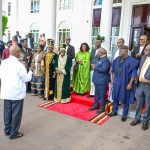




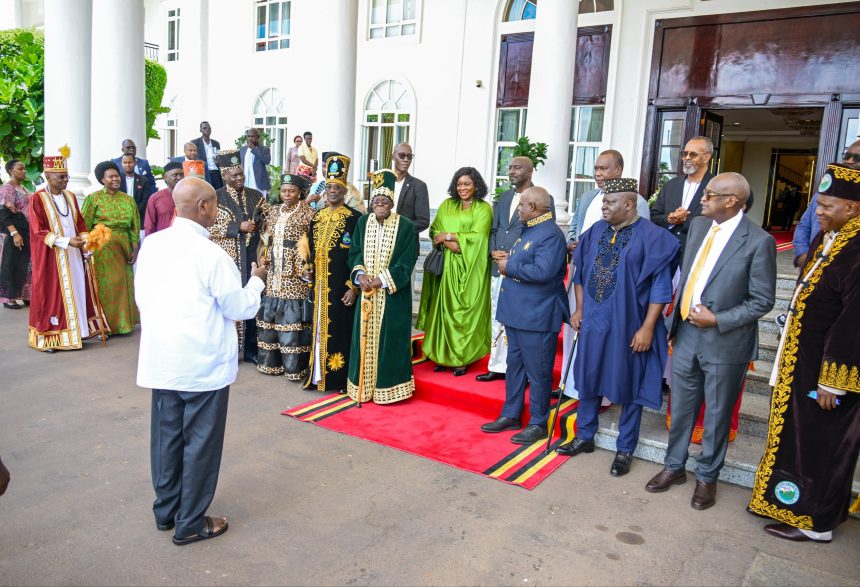
President Yoweri Museveni has urged traditional and cultural leaders to concentrate on preserving Uganda’s heritage, indigenous knowledge and community values, cautioning them against taking on responsibilities reserved for elected leaders and constitutional institutions.
Speaking on Wednesday at the opening of a two-day consultative conference at State House, Entebbe, Museveni said cultural institutions should work alongside government structures rather than compete with them in matters of legislation and public administration.
In a statement shared on his official X account after the meeting, the President highlighted the strengths of Uganda’s traditional societies, particularly their expertise in agriculture, livestock keeping, crafts, medicine and other specialised occupations under the traditional Emyooga system.
“While addressing the traditional and cultural leaders, I emphasised that our indigenous societies had strong foundations in agriculture, livestock, crafts, medicine and other specialised occupations (Emyooga). However, tribal chauvinism and lack of integration weakened us,” Museveni said.
He argued that patriotism and Pan-Africanism remain important in overcoming divisions and promoting shared prosperity, adding that cultural leaders have a responsibility to protect indigenous languages, customs and knowledge while leaving political and administrative matters to elected authorities.
Click here to join our WhatsApp Group and Receive Daily News
The President also challenged what he described as a colonial mindset that encourages Africans to look down upon their own cultural heritage.
According to a statement from State House, Museveni cautioned against turning traditional kingdoms and chiefdoms into political platforms. He said Africa’s economic transformation depends on pursuing key priorities, including democracy, strategic security, economic prosperity and greater integration of African markets.
He cited regional and continental frameworks such as the East African Community (EAC) and the African Continental Free Trade Area (AfCFTA) as important avenues for strengthening economic cooperation.
Museveni further called for traditional skills in agriculture, blacksmithing, carpentry, leather tanning and pottery to be documented and transferred to younger generations, describing them as valuable resources for economic development and resilience.
In their response, representatives of cultural institutions expressed readiness to work directly with the central government on initiatives aimed at improving livelihoods, promoting local industrialisation, developing skills and creating wealth.
They proposed that cultural institutions make land available for model agricultural farms that could serve as practical training centres, provided government offers the necessary support.
“Cultural institutions are ready to offer land for model agricultural farms to serve as practical training centres, provided the government supports us with high-yield seeds, livestock, irrigation infrastructure, and extension technical expertise,” a representative said during the presentation.
The leaders also proposed the establishment of a Digital Cultural Park and an annual Uganda National Cultural Festival in partnership with the Ministry of Gender, Labour and Social Development to promote cultural tourism and preserve the country’s history.
They further asked government to address operational challenges facing the Forum of Cultural Institutions, particularly inadequate infrastructure and staffing.
Speaking at the conference, Minister of Gender, Labour and Social Development Gen Henry Tumukunde called on traditional authorities to support government efforts to address social problems affecting communities.
He urged cultural leaders to join the fight against gender-based violence, child marriage, teenage pregnancy and harmful cultural practices, noting that their influence could also help unlock opportunities in Uganda’s creative industries and Orange Economy.
The two-day meeting at State House, Entebbe, is expected to explore ways of strengthening cooperation and establishing a structured framework for engagement between cultural institutions and the central government.
Also Read: NRM’s James Leku wins Adjumani West by-election