





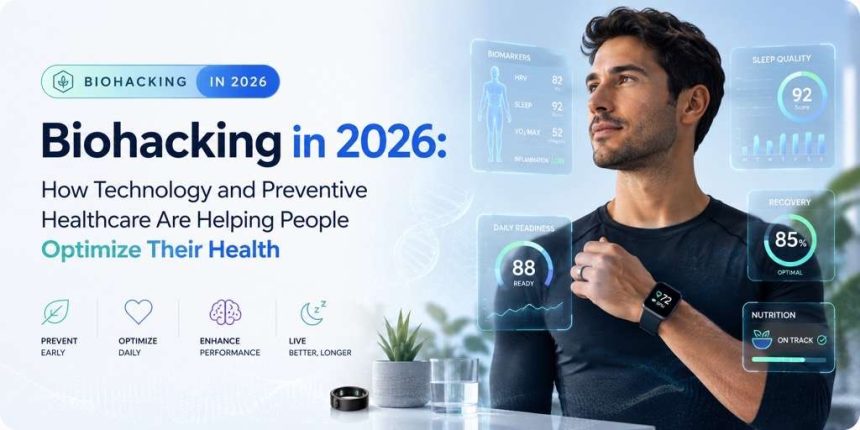
Wearable devices, artificial intelligence and digital healthcare services are giving people new ways to monitor their health and improve daily habits. However, experts caution that technology-driven wellness strategies must be guided by reliable evidence and professional medical advice.
- What Is Biohacking?
- Why Biohacking Is Attracting Attention in 2026
- Popular Biohacking Strategies and What to Know About Them
- How Telemedicine Supports Technology-Driven Healthcare
- The Benefits and Limitations of AI-Powered Health Tools
- Is Biohacking Safe?
- How to Start Biohacking Without Overspending
- The Future of Biohacking and Preventive Healthcare
- Conclusion: Better Health Requires Evidence, Not Just Data
The way people approach healthcare is gradually changing. Rather than seeking medical attention only after symptoms appear, many are becoming more interested in monitoring their health, identifying potential risks early and making lifestyle changes that support long-term well-being.
This approach is often associated with biohacking, a broad term describing efforts to improve health, physical performance or mental well-being through lifestyle adjustments, technology and other interventions.
In 2026, growing interest in wearable technology, artificial intelligence, personalised nutrition and preventive healthcare is bringing biohacking into wider public discussion.
From smartwatches that track activity and sleep to virtual consultations that connect patients with healthcare professionals, digital tools can help individuals become more involved in managing their health. However, their usefulness depends on the quality of the information they provide and how that information is interpreted.
What Is Biohacking?
Biohacking involves making deliberate changes to daily habits, the environment or selected health practices in an effort to improve physical or mental performance.
The term covers a wide range of activities. Some are familiar health practices, such as exercising regularly, maintaining a consistent sleep schedule and eating a balanced diet. Others involve technology, specialised monitoring or experimental interventions.
Common examples include:
- Tracking sleep duration and daily physical activity.
- Monitoring heart rate and other available health measurements.
- Adjusting nutrition according to individual needs and health goals.
- Using mindfulness and relaxation techniques to manage stress.
- Participating in appropriate preventive health screenings.
- Using digital health tools to record symptoms and monitor progress.
Not every practice described as biohacking is scientifically established. Some approaches have reasonable evidence supporting their benefits, while others remain uncertain or carry significant risks.
The most responsible approach is to distinguish evidence-based health practices from experimental techniques promoted without sufficient scientific support.
Why Biohacking Is Attracting Attention in 2026
Several developments are contributing to increased interest in personalised health management.
1. Greater Access to Personal Health Data
Smartwatches, fitness trackers and health applications can collect information about daily movement, heart rate, sleep patterns and other measurements.
This information can help users recognise changes in their routines. For example, an activity tracker may reveal that someone has become less physically active over several weeks, prompting them to reconsider their daily habits.
However, measurements differ in accuracy depending on the device, sensor, activity and metric being assessed. Consumer wellness devices should not automatically be treated as medical diagnostic equipment.
A reading is most useful when it provides meaningful context rather than becoming a number that users feel compelled to improve every day.
2. Increased Interest in Preventive Healthcare
Preventive healthcare focuses on reducing health risks, identifying certain conditions early and supporting people in maintaining their well-being.
It can include routine medical assessments, recommended screenings, vaccinations, lifestyle counselling and management of known risk factors.
Biohacking often overlaps with this approach because both encourage people to take an active role in their health.
However, preventive care should be based on established medical guidance and individual risk factors. More testing is not always better, and unnecessary tests can lead to false alarms, additional expenses and avoidable follow-up procedures.
People should discuss appropriate screening schedules with qualified healthcare professionals rather than relying on general online recommendations.
3. Artificial Intelligence and Personalised Health Insights
Artificial intelligence is increasingly being incorporated into digital health applications and monitoring platforms.
Depending on the system, AI tools may help organise health records, summarise measurements, identify patterns or support communication between patients and healthcare professionals.
For instance, an application might summarise changes in a person’s recorded sleep schedule or physical activity over time.
Such tools may make information easier to understand, but their conclusions are only as reliable as the underlying data and methods. AI-generated recommendations can be incomplete, inaccurate or unsuitable for a particular individual.
They should therefore support, rather than replace, appropriate clinical judgement.
4. Growing Interest in Healthy Ageing
Many people are interested in maintaining mobility, independence and quality of life as they grow older.
This has increased attention on sleep, nutrition, physical activity, cardiovascular health and other factors associated with long-term well-being.
Although biohacking is sometimes promoted as a way to reverse ageing or dramatically extend lifespan, such claims require strong scientific evidence.
For most people, sustainable habits and appropriate preventive healthcare are more dependable priorities than expensive products promising extraordinary results.
Popular Biohacking Strategies and What to Know About Them
Different strategies have different levels of evidence, cost and potential risk. Understanding those differences helps people make more informed choices.
1. Improving Sleep Quality
Sleep is an essential part of physical and mental health. Insufficient or disrupted sleep can affect mood, concentration, daily performance and general well-being.
People interested in biohacking often use sleep trackers to observe their sleeping schedules and identify habits that may interfere with rest.
Practical steps for improving sleep include:
- Maintaining a consistent bedtime and waking time.
- Creating a comfortable, quiet sleeping environment.
- Limiting stimulating activities close to bedtime.
- Reviewing caffeine consumption, especially later in the day.
- Seeking medical advice for persistent sleep difficulties.
Wearable devices can estimate sleep duration and patterns, but their classifications of sleep stages may not always match clinical measurements. Users should avoid treating a device’s sleep score as a definitive assessment of their health.
2. Personalised Nutrition
Nutrition is another major area of interest within biohacking.
People may adjust meal composition, portion sizes and eating schedules according to their activity levels, preferences and health goals.
Useful foundations include eating a varied diet, choosing nutrient-rich foods and maintaining adequate hydration. Individual nutritional requirements can differ according to age, activity, medical conditions and other circumstances.
Some people also explore intermittent fasting, which involves limiting eating to particular periods. Although it may suit certain adults, it is not appropriate for everyone and is not guaranteed to produce better health outcomes than other sustainable eating patterns.
People with medical conditions, a history of eating disorders, pregnancy or medication-related dietary requirements should seek appropriate professional advice before making substantial changes to their eating patterns.
Personalised nutrition should be guided by sound nutritional principles rather than unsupported claims about special diets or supplements.
3. Wearable Health Technology
Wearable devices are among the most visible tools associated with modern biohacking.
Depending on the model, they may record:
- Heart rate and activity levels.
- Steps and estimated energy expenditure.
- Sleep duration and patterns.
- Certain heart rhythm measurements.
- Blood oxygen estimates on supported devices.
These measurements can help users follow trends and discuss relevant observations with healthcare professionals.
However, different devices use different sensors and algorithms. Their performance can vary, and some readings may be affected by movement, fit, skin characteristics or other factors.
Wearable data should not be used as the sole basis for diagnosing a condition, changing medication or dismissing concerning symptoms.
The value of these devices lies in providing useful information when their limitations are understood.
4. Stress Management and Mental Well-Being
Biohacking also includes practices intended to support emotional well-being and manage everyday stress.
Examples include meditation, controlled breathing exercises, mindfulness and regular physical activity.
Some people use digital applications to establish routines, record mood changes or receive reminders to take breaks.
These practices may help with stress management, but they do not replace professional care for persistent or severe mental health difficulties.
Individuals should also recognise that not every aspect of stress can be solved through personal routines. Financial hardship, unsafe environments, excessive workloads and other external pressures may require broader practical or social interventions.
5. Preventive Screenings and Health Assessments
Regular health assessments can help identify certain conditions or risk factors before serious symptoms develop.
The appropriate checks depend on factors such as age, medical history, family history, symptoms and recognised screening recommendations.
Some people are drawn to extensive laboratory panels or repeated testing in the hope of detecting every possible health problem. Yet broad testing without a clear medical reason can produce misleading results and unnecessary follow-up.
A qualified healthcare professional can help determine which assessments are appropriate and explain what the results mean.
Preventive healthcare should focus on useful, evidence-based checks rather than the number of tests performed.
How Telemedicine Supports Technology-Driven Healthcare
Telemedicine allows patients to consult healthcare professionals remotely through supported video, telephone or digital communication services.
It can make certain forms of healthcare more convenient, particularly for people who face travel difficulties or live far from suitable providers.
In the context of biohacking, telemedicine may help individuals discuss their health goals, review selected measurements, receive preventive care guidance and arrange follow-up consultations.
A typical process may involve the following steps:
- Book a consultation: Choose an appropriate healthcare professional or service.
- Share relevant information: Explain symptoms, medical history, lifestyle habits and concerns.
- Review the available data: Discuss relevant health records or device measurements, where appropriate.
- Receive professional guidance: Agree on suitable next steps, which may include lifestyle changes, further assessment or treatment.
- Arrange follow-up: Review progress and reassess the plan when necessary.
Remote consultations have limitations. Some conditions require a physical examination, laboratory testing or urgent in-person care. Telemedicine should be used according to the service’s capabilities and the patient’s clinical needs.
The Benefits and Limitations of AI-Powered Health Tools
AI may help people make sense of large amounts of information that would otherwise be difficult to organise.
For example, digital systems can summarise recorded measurements, flag unusual patterns for further review or help healthcare teams manage information more efficiently.
However, identifying a pattern is not the same as establishing a diagnosis. A change in heart rate or sleep duration may have several explanations, and automated systems may not have enough context to distinguish between them.
Other concerns include personal data privacy, inaccurate recommendations and differences in the quality of available tools.
Before using an AI-powered health service, individuals should consider whether it explains its limitations, protects sensitive information and provides a clear route to professional care when needed.
AI can be a useful supporting tool, but important medical decisions should not be based solely on an automated recommendation.
Is Biohacking Safe?
The safety of biohacking depends on the specific practice.
Common health habits, such as regular physical activity, adequate sleep, balanced nutrition and appropriate stress management, are generally sensible foundations for well-being when adapted to individual needs.
More experimental interventions require greater caution. Extreme fasting, unverified supplements, unsupervised medication use and invasive procedures can create serious health risks.
Some products marketed for longevity or performance may have limited evidence of benefit, unclear ingredient quality or potential interactions with medication.
Before adopting a new health intervention, consider these questions:
- Is there credible scientific evidence supporting its claimed benefits?
- What are the possible side effects and risks?
- Is the product or procedure appropriately regulated?
- Could it interact with an existing condition or prescribed medication?
- Is professional supervision necessary?
- Is the expected benefit worth the cost and potential harm?
People should not stop prescribed treatment or delay medical assessment because a biohacking method promises a natural or technologically advanced alternative.
The safest approach is to prioritise established health practices and seek qualified advice before trying interventions that carry meaningful risks.
How to Start Biohacking Without Overspending
Improving health does not require expensive devices, specialised supplements or elaborate monitoring systems.
A practical starting point is to identify one or two habits that could make a meaningful difference.
For example, someone who rarely exercises might begin with regular walking. A person with inconsistent sleep may benefit from establishing a more stable routine. Someone concerned about a health risk could arrange an appropriate medical assessment.
A simple process can help:
Step 1: Define a clear goal. Focus on a meaningful outcome, such as improving sleep consistency or becoming more physically active.
Step 2: Establish a baseline. Record relevant habits or measurements without assuming that every available metric needs to be tracked.
Step 3: Make one manageable change. Choose an adjustment that can realistically be maintained.
Step 4: Review progress. Look for changes over time rather than reacting to every daily fluctuation.
Step 5: Seek professional advice when needed. Consult a qualified healthcare provider if symptoms persist or a proposed intervention involves medical risks.
This approach helps keep health improvement practical and reduces the temptation to spend money on products that offer little demonstrated value.
The Future of Biohacking and Preventive Healthcare
The relationship between technology and preventive healthcare is likely to continue developing.
Wearable devices may provide increasingly detailed measurements, while AI tools may help organise health information and support communication between patients and providers.
Remote monitoring could also help healthcare teams follow selected patients between appointments, particularly when the measurements are reliable and linked to an appropriate care plan.
However, wider use of health technology will also raise questions about data privacy, measurement accuracy, accessibility and how clinicians should interpret the information.
Not everyone can afford advanced devices or access reliable digital services. Preventive healthcare should therefore remain accessible to people who do not own smartwatches or use health applications.
The most useful innovations will be those that improve meaningful health outcomes, support sound medical decisions and fit into reliable healthcare systems.
Conclusion: Better Health Requires Evidence, Not Just Data
Biohacking reflects a growing interest in understanding personal health and making deliberate changes to improve well-being.
Wearable devices, AI-powered tools, telemedicine and preventive screenings can help people collect information and become more involved in managing their health. Their benefits, however, depend on reliability, appropriate interpretation and evidence-based use.
Technology cannot replace the foundations of good health or guarantee longer life. Nor does collecting more data automatically mean that someone is healthier.
For individuals interested in biohacking, the most effective starting point is to focus on sustainable habits, use technology selectively and seek qualified medical advice when necessary.
Ultimately, the aim should not be to optimise every measurement, but to make informed decisions that support health, function and quality of life over the long term.