




Uganda Police have said a lack of space to hold impounded vehicles has prevented them from carrying out daily enforcement of a 100-day operation targeting dangerous and unroadworthy public service vehicles.
Operation Ganyegenya began on 24 August, four days after the Ministry of Works and Transport ordered a crackdown on public service vehicles considered unsafe for passengers.
Police impounded 178 commuter taxis, commonly known as matatus, across the Kampala metropolitan area during the first day of enforcement.
But Traffic Police spokesperson Michael Kananura said officers could not continue impounding vehicles every day because available holding facilities would quickly become overwhelmed.
“It would have been a challenge to continue impounding vehicles every day when we don’t have space to put them, because there are very many. So we have decided to impound, carry out inspections, release them, and then go back to carry out another enforcement,” Mr Kananura said.
Of the 178 taxis impounded, 63 were seized in Kampala Metropolitan North, which includes Kawempe, while 62 were impounded in Kampala Metropolitan South, covering the Katwe-Entebbe corridor.
Another 53 were seized in Kampala Metropolitan East, which covers the Jinja Road-Mukono stretch.
More than 100 taxis inspected
Mr Kananura said inspection teams from the Ministry of Works and Transport, working with police, had examined 106 of the 178 vehicles, leaving 72 awaiting inspection.
The checks are being conducted at designated centres including Naguru, Wankulukuku, Natete and Gayaza.
Inspectors examine vehicles for mechanical and structural defects that could endanger passengers and other road users.
The checks include tyres, service brakes, cracked windscreens, headlights, rear lights and bodywork.
Officials are also checking seat belts, passenger-door locks, first-aid kits, fire extinguishers and warning triangles, as well as illegal or dangerous bull bars.
The condition and cleanliness of seats and other interior fittings are also examined.
Vehicles found with defects are released to their owners for repairs but without their number plates.
They are then required to return for a second inspection using specialised equipment.
Vehicles that pass the second inspection have their number plates returned and are cleared to resume operations.
“We have to inspect them and hand them over to the owners for repairs, clear the space, then we can go back on the road and carry out another round of enforcement,” Mr Kananura said.
Police say this means the operation has not been suspended, but is being conducted in phases to allow impounded vehicles to be processed and holding space cleared.
Minister criticises condition of taxis
State Minister for Works and Transport Fred Byamukama said previous attempts to remove unsafe taxis from Uganda’s roads had faced resistance from some public transport operators.
According to the minister, some operators had threatened industrial action or warned that they would vote against the government if enforcement continued.
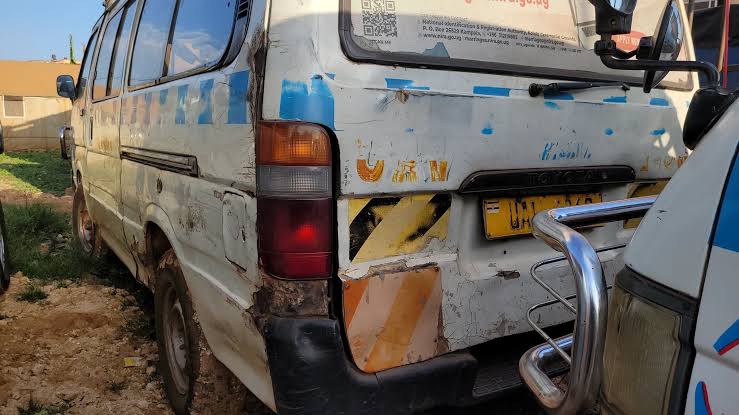
Mr Byamukama said the mechanical and interior condition of some vehicles had deteriorated to levels that posed a risk to passengers.
“These taxis are beyond repair. You find them loading people, but when you enter, the seats are torn, smelling. Some are tied with superglue. The conductor is holding the door with superglue, the doors cannot lock, and the driver is using a steering wheel tied with ropes. When you look at the tyres, the people are moving at the mercy of God,” he said.
Police plan night operations
Traffic Police also say they are changing their enforcement strategy to target operators who avoid checkpoints during the day and put defective vehicles back on the road at night.
Mr Kananura said officers would increasingly conduct patrols along different routes, with nighttime enforcement expected to form part of the operation.
“Working at night is going to be dangerous for them, because we don’t want them on the road. We shall now change our tactics; they will not like what will come against them,” he said.
Police reject bribery allegations
Police have meanwhile rejected allegations that some drivers have been able to recover impounded vehicles by bribing traffic officers.
Mr Kananura said an officer who accepted money to release a vehicle known to have dangerous mechanical defects would face disciplinary action.
Police say traffic officers involved in the operation are being monitored using cameras as well as covert personnel deployed along the roads.
Officers found soliciting or accepting bribes could face proceedings before the Traffic Disciplinary Court at Natete police station.
Police say Operation Ganyegenya will eventually be expanded across Uganda after its initial implementation in the Kampala metropolitan area.
The force maintains that the gap between enforcement exercises is intended to allow inspections and repairs to take place before another group of vehicles is impounded.